"Is Your Cat Secretly Stressed? The Hidden Signs Every Cat Owner Must Know"
Have you ever wondered if your seemingly content cat is actually battling stress behind those calm, mysterious eyes? You're not alone. Studies reveal that up to 80% of domestic cats experience stress at some point in their lives, yet most owners miss the warning signs entirely.
Understanding feline stress isn't just about pet comfort—it's about preventing serious health complications that can dramatically impact your cat's quality of life and lifespan.
The Master of Disguise: Why Cats Hide Their Stress
Cats are evolutionary masters of concealment. In the wild, showing weakness could mean becoming prey, so our domestic companions have retained this survival instinct. Unfortunately, this means your stressed cat might appear perfectly normal until the situation becomes severe.
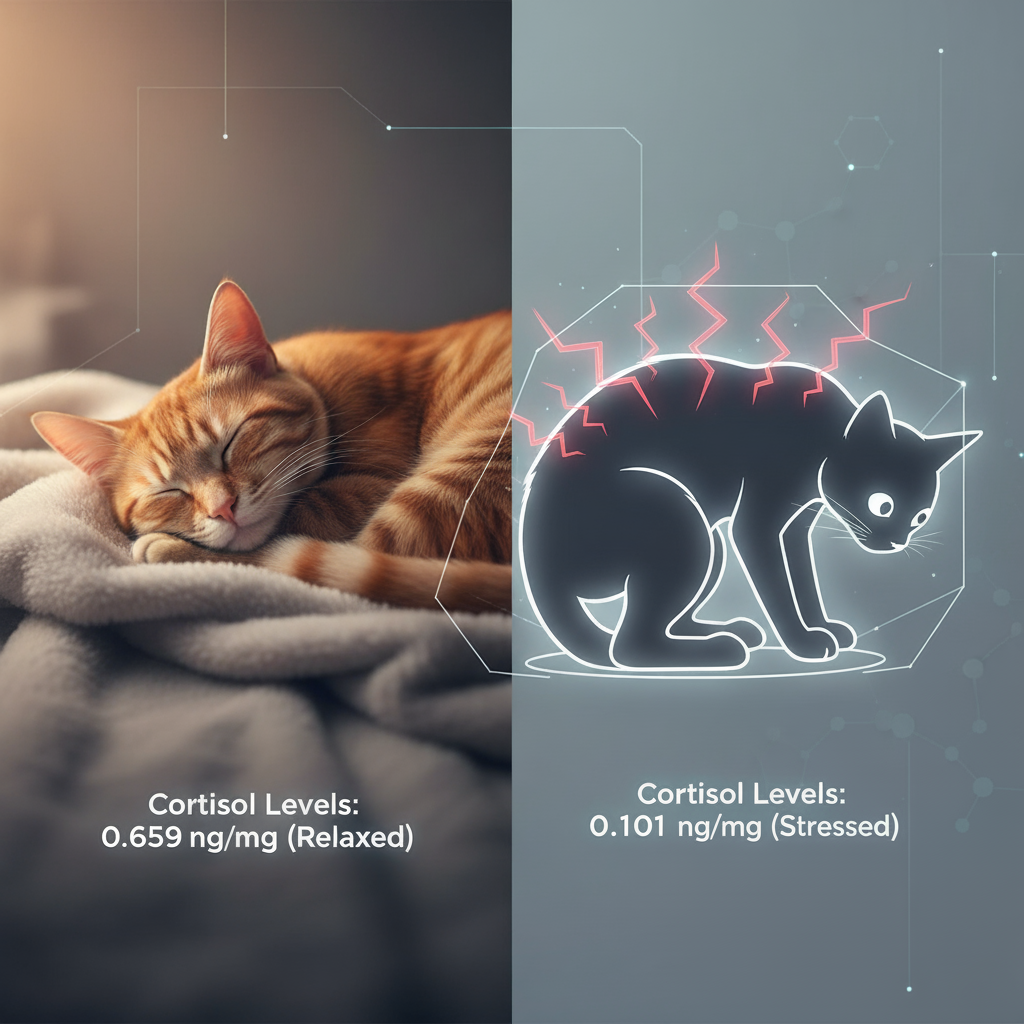
Recent scientific breakthroughs have given us concrete ways to measure feline stress. Researchers examining environmental factors found that stressed cats had cortisol levels of 0.101 ng/mg in their hair samples, while relaxed cats showed only 0.059 ng/mg—nearly half the stress hormone concentration. This research proves what many veterinarians have long suspected: cats experience stress more intensely than we previously understood.
Behavioral Red Flags You Can't Ignore
The Obvious Signs:
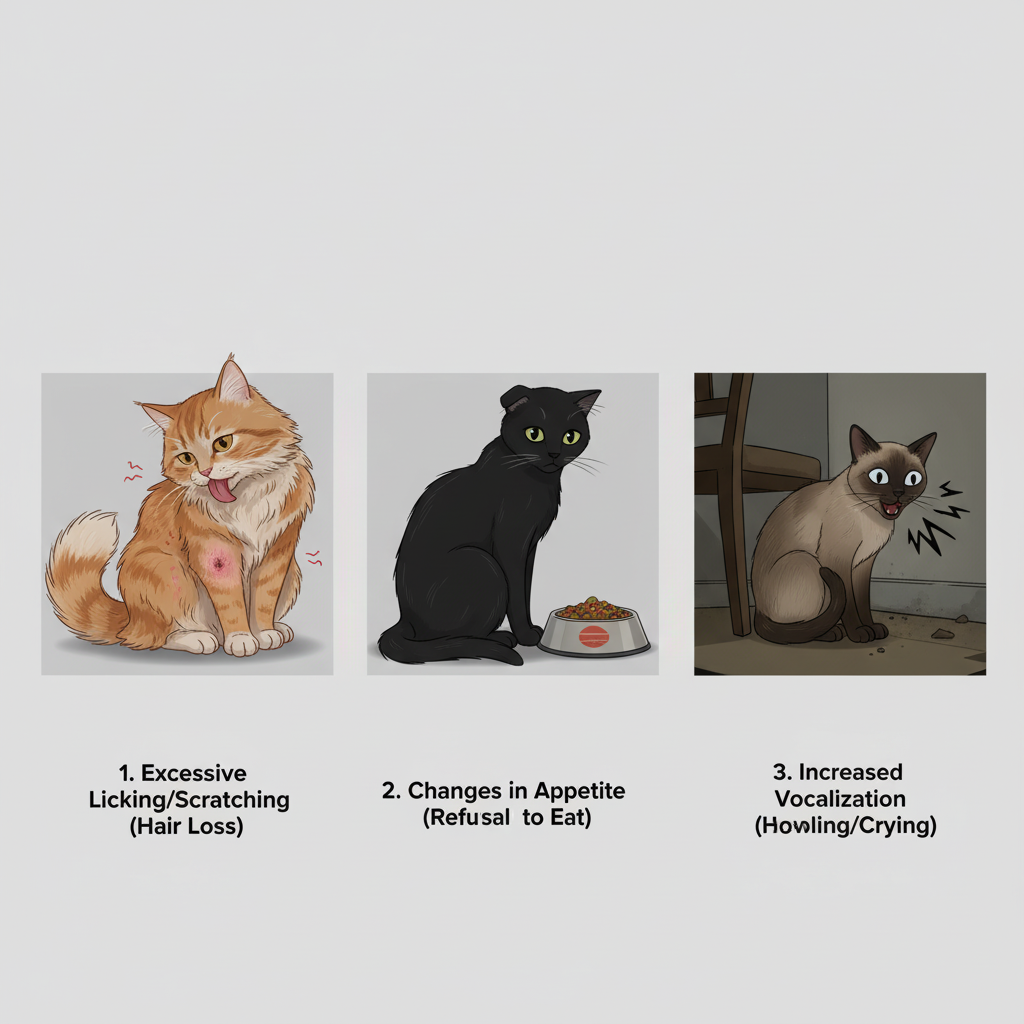
Watch for excessive scratching or licking that leads to bald spots or irritated skin. Changes in appetite—either sudden loss of interest in food or unusual increases in consumption—frequently signal distress. If your normally quiet cat becomes vocal or your chatty companion falls silent, pay attention.
The Subtle Indicators:
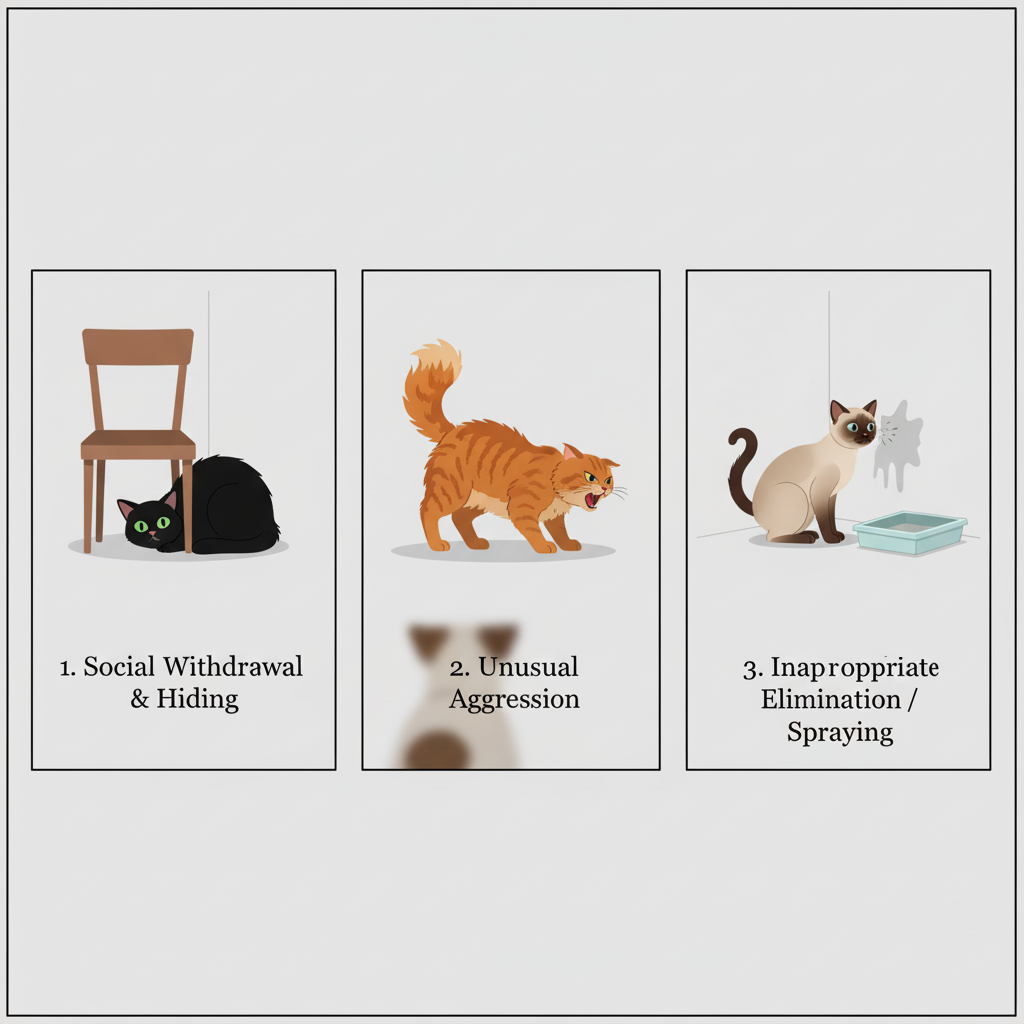
More challenging to recognize are the quiet signs of feline anxiety. Social withdrawal where your once-friendly cat avoids interaction and hides for extended periods should raise immediate concerns. Conversely, unusual aggression toward family members or other pets often indicates underlying stress.
Perhaps most frustrating for owners, inappropriate elimination—toileting outside the litter box or spraying in unusual locations—frequently represents psychological distress rather than medical issues.
Physical Warning Signs:
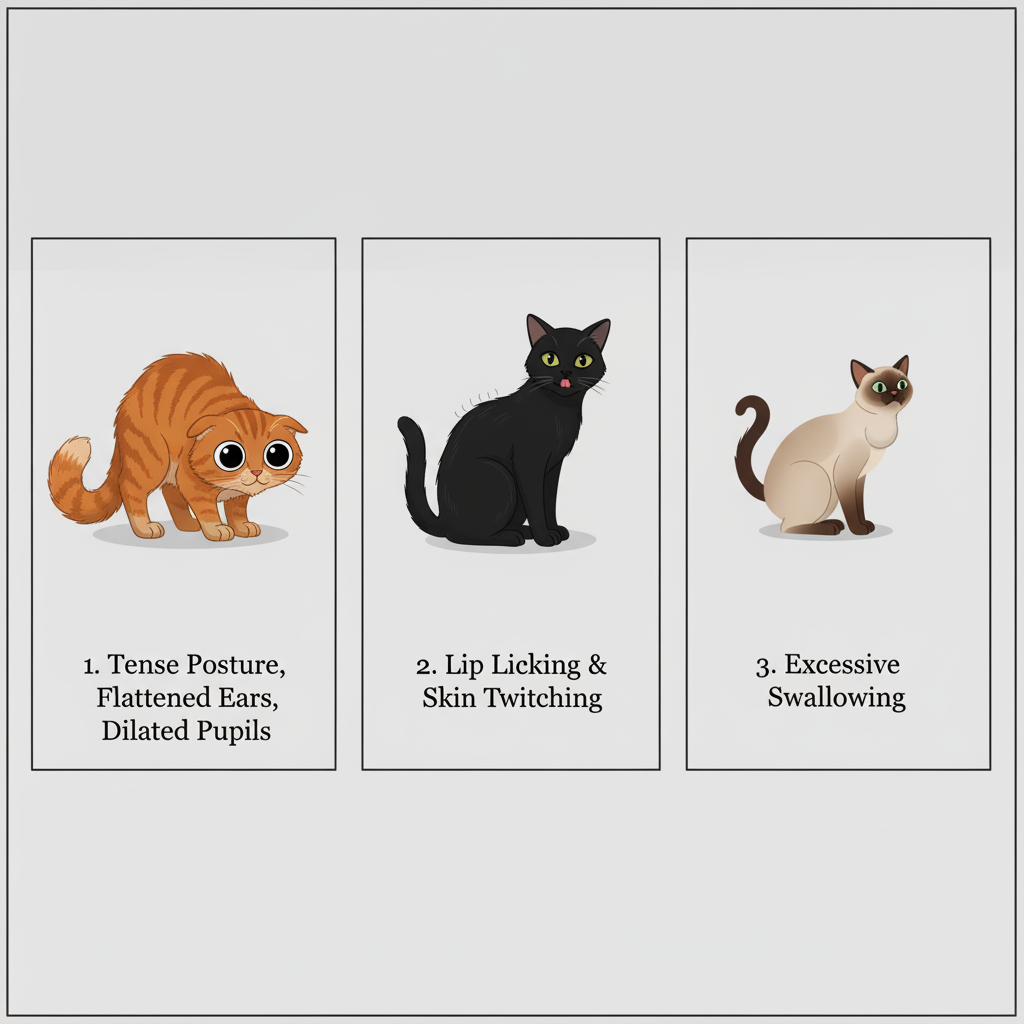
Learn to read your cat's body language. Tense, hunched posture combined with flattened ears and dilated pupils indicates acute stress. Subtler signs include increased lip licking, excessive swallowing, and skin twitching or rippling.
The Health Connection You Need to Understand
Chronic stress doesn't just make cats uncomfortable—it creates serious health consequences. Long-term anxiety can manifest as urinary tract problems, digestive disturbances, compromised immune function, skin conditions, and accelerated physical decline. These conditions often require expensive veterinary treatment that could have been prevented through early stress management.
Your Action Plan
Start observing your cat with fresh eyes. Create a simple daily log noting any behavioral changes, however minor they seem. Look for patterns—does stress increase during specific times, around certain people, or in particular situations?
Remember, recognizing stress early gives you the power to intervene before minor anxiety becomes a major health crisis. Your cat's well-being depends on your ability to read the signs they're working so hard to hide.