
"Mental Gymnastics for Cats: How Cognitive Enrichment Eliminates Stress at Its Source"
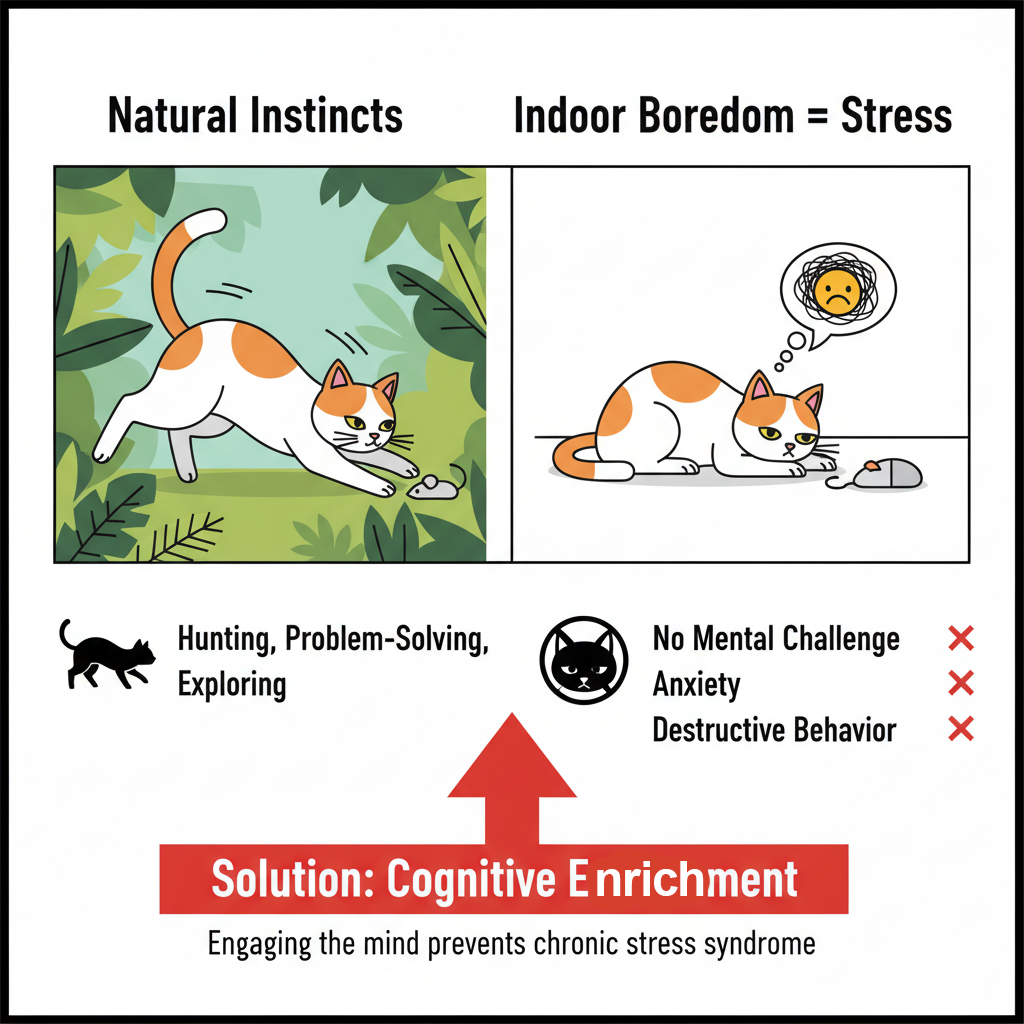
What if the key to your cat's stress relief wasn't medication or gadgets, but simply engaging their brilliant mind in the way nature intended? Today we're exploring cognitive enrichment—the scientifically-proven approach that addresses anxiety by satisfying your cat's natural behavioral needs while providing mental exercise that actively reduces stress.
The Boredom-Stress Connection
Before diving into solutions, let's understand the problem. Domestic cats retain the complex hunting instincts of their wild ancestors, but most indoor cats never get to exercise these natural behaviors. Imagine being a natural-born problem solver forced to live without mental challenges—you'd develop anxiety too.
This cognitive understimulation creates what behaviorists call "chronic stress syndrome," where cats develop anxiety-related behaviors simply because their intelligent minds aren't being properly engaged. The solution isn't just managing the stress—it's preventing it by providing appropriate mental stimulation.
The Puzzle Feeding Revolution: Research That Changes Everything
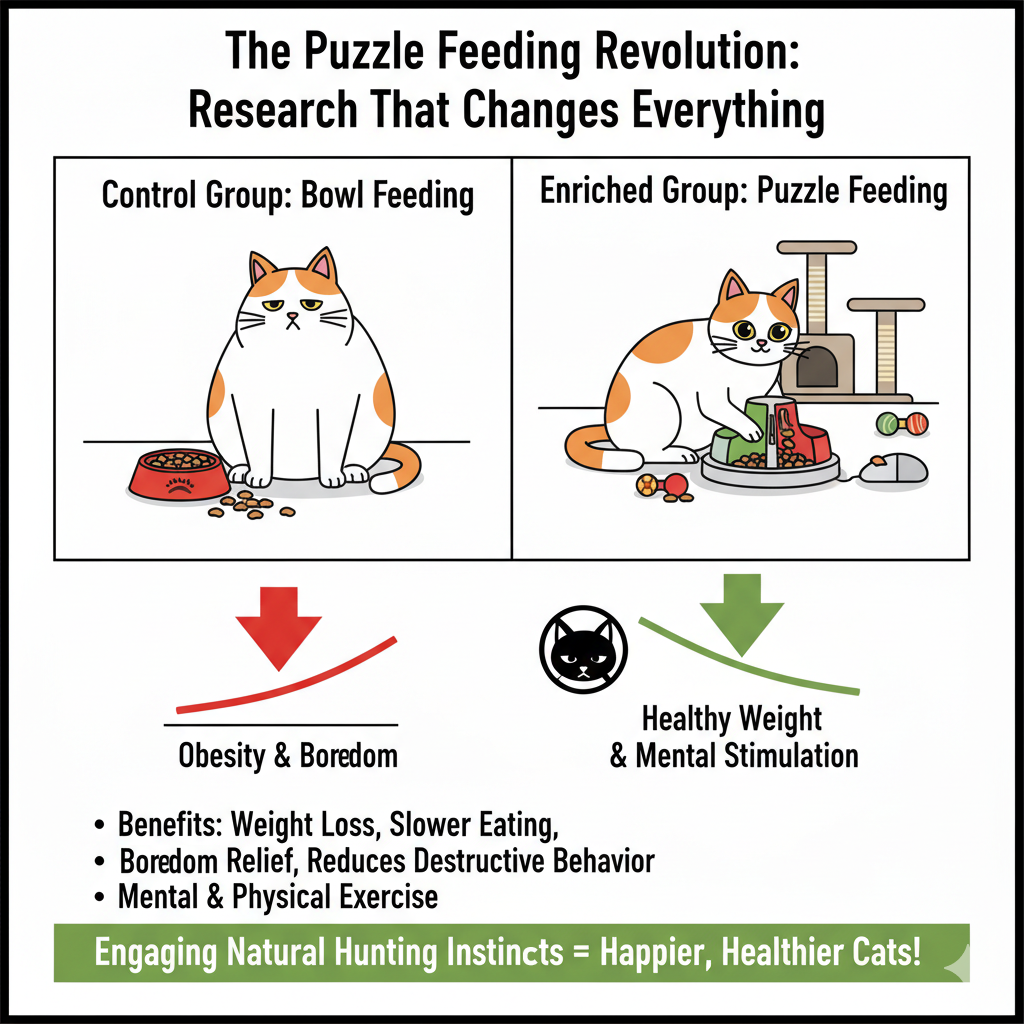
Extensive clinical research has revealed the remarkable benefits of cognitive enrichment through puzzle feeding systems. Studies show that cats using food puzzles experience:
- Significant weight loss in overweight cats
- Decreased aggression toward humans and other cats
- Reduced anxiety and fear responses
- Complete cessation of attention-seeking behaviors
- Resolution of litter box avoidance issues
These improvements aren't just behavioral band-aids—they result from engaging natural hunting behaviors that provide both mental and physical stimulation.
Survey research involving 3,192 cat owners revealed that 30% already used puzzle feeders, with an additional 18% having tried them previously. The benefits consistently observed by users include slower eating (reducing vomiting), boredom relief, redirection from destructive behaviors, exercise provision, mental stimulation, and weight control.
Your Cognitive Enrichment Toolkit
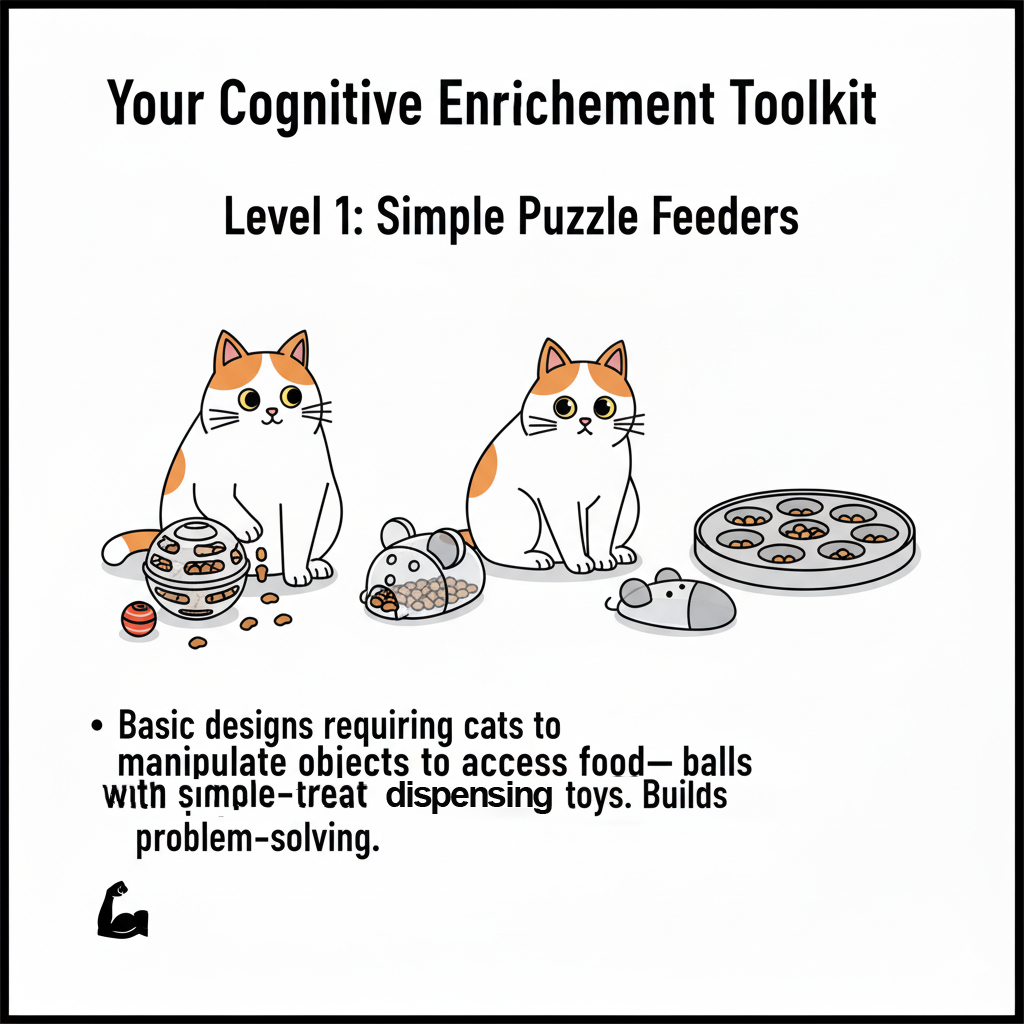
Level 1: Simple Puzzle Feeders
Start with basic designs requiring cats to manipulate objects to access food—balls with holes or simple treat-dispensing toys. These entry-level puzzles suit cats new to cognitive challenges and build confidence in problem-solving abilities.
Level 2: Multi-Chamber Systems
Advanced feeders incorporate multiple compartments, each requiring different manipulation techniques like pressing buttons, pulling knobs, tugging ropes, or sliding drawers. These systems provide extended mental engagement and can be rotated to maintain interest over time.
Level 3: Species-Specific Designs
The most sophisticated feeders are designed specifically for feline anatomy and behavior—fish-bowl shaped feeders requiring paw scooping or tunnel systems that encourage natural hunting strategies. These systems most closely mimic the mental challenges cats would face in wild environments.
DIY Champions: Cost-Effective Creativity
Don't underestimate homemade solutions. Toilet paper rolls with holes cut for treats, egg cartons with kibble hidden in compartments, or water bottles with strategic openings provide excellent enrichment while allowing complete customization for individual cats.
Implementation Strategy: Setting Your Cat Up for Success
Not every cat immediately embraces puzzle feeding—success requires gradual introduction and patience. Here's your step-by-step approach:
Week 1: Introduction Phase
Start with the simplest possible puzzle and high-value treats or favorite foods to create positive associations. Many cats need encouragement to engage initially, so don't be discouraged by hesitation.
Week 2-3: Building Confidence
Gradually increase puzzle complexity as your cat develops problem-solving skills. Watch for signs of frustration—if your cat gives up quickly, step back to an easier level.
Week 4+: Customization
Match difficulty levels to individual abilities and preferences. Some cats excel at manipulation tasks while others prefer spatial puzzles. Observing response patterns helps you provide optimal challenges.
Beyond Food Puzzles: Comprehensive Mental Stimulation
While puzzle feeding forms the foundation of cognitive enrichment, comprehensive programs incorporate multiple types of mental challenges:
Interactive Play Sessions
Wand toys with feathers or fabric that mimic prey movement engage hunting instincts while providing physical exercise. Regular interactive play sessions help cats practice natural behaviors in controlled environments.
Environmental Complexity
Rotating toy selections prevent habituation and maintain novelty. Cats benefit from environmental changes that provide new exploration opportunities without causing stress.
Sensory Enrichment
Incorporating different textures, scents, and visual stimuli creates multi-dimensional mental engagement. Scratching posts with various materials, safe plants for sniffing, and window perches for bird-watching all contribute to cognitive wellness.
The Multi-Cat Household Challenge
Puzzle feeding becomes more complex in multi-cat homes where competition might create stress rather than relieving it. Solutions include:
- Separate feeding stations to prevent resource guarding
- Multiple puzzle types accommodating different skill levels and preferences
- Supervised feeding times ensuring each cat can engage without interference
- Individual puzzle complexity matched to each cat's abilities
Measuring Success: What to Watch For
Effective cognitive enrichment produces observable changes in overall behavior and stress levels:
Positive Indicators:
- Increased confidence in exploring new environments
- Reduced attention-seeking behaviors
- Better sleep patterns and overall calmness
- Decreased destructive behaviors like inappropriate scratching
- Improved social interactions with humans and other pets
Warning Signs to Address:
- Increased frustration or aggression around puzzle feeders
- Complete avoidance of cognitive challenges
- Guarding behaviors around enrichment items
- Excessive obsession with puzzle solving
Integration with Other Stress Management Approaches
Cognitive enrichment works synergistically with other stress management strategies. Cats engaged in regular mental exercise show improved responses to:
- Pheromone therapy effectiveness
- CBD oil absorption and benefits
- Environmental modifications
- Training and behavioral modification programs
The mental confidence gained through successful problem-solving seems to create overall resilience that enhances other interventions.
Creating Your Personalized Enrichment Program
Every cat is unique, requiring individualized approaches to cognitive enrichment:
High-Energy Cats: Need complex, challenging puzzles that require significant mental effort and problem-solving skills.
Cautious Cats: Benefit from simple, predictable puzzles that build confidence without creating frustration.
Senior Cats: Require age-appropriate challenges that stimulate the mind without causing physical strain.
Multi-Cat Dynamics: Need carefully managed enrichment that promotes individual growth without triggering competition.
The Long-Term Vision
Cognitive enrichment isn't a quick fix—it's a lifestyle approach that addresses stress prevention rather than just management. By engaging your cat's natural intelligence and behavioral needs, you're creating a foundation of mental wellness that prevents many stress-related problems from developing in the first place.
In our final post of this series, we'll tie everything together—showing you how to create a comprehensive, personalized stress management program that combines the best of modern technology, traditional remedies, and natural behavioral approaches for optimal feline wellness.